Soccer Training Program PDF: A Comprehensive Plan
A well-structured PDF program is vital for player development, encompassing a 12-month plan divided into phases.
It focuses on fitness, skill, and realistic goals,
adapting to individual needs and available resources.
Soccer training programs, particularly those delivered as comprehensive PDFs, are becoming increasingly essential for player development at all levels. These programs offer a structured approach to improving fitness, technical skills, and tactical understanding. A successful program isn’t simply a collection of drills; it’s a carefully sequenced plan designed to build a player’s capabilities over time, progressing through distinct phases like pre-season, in-season, and off-season.
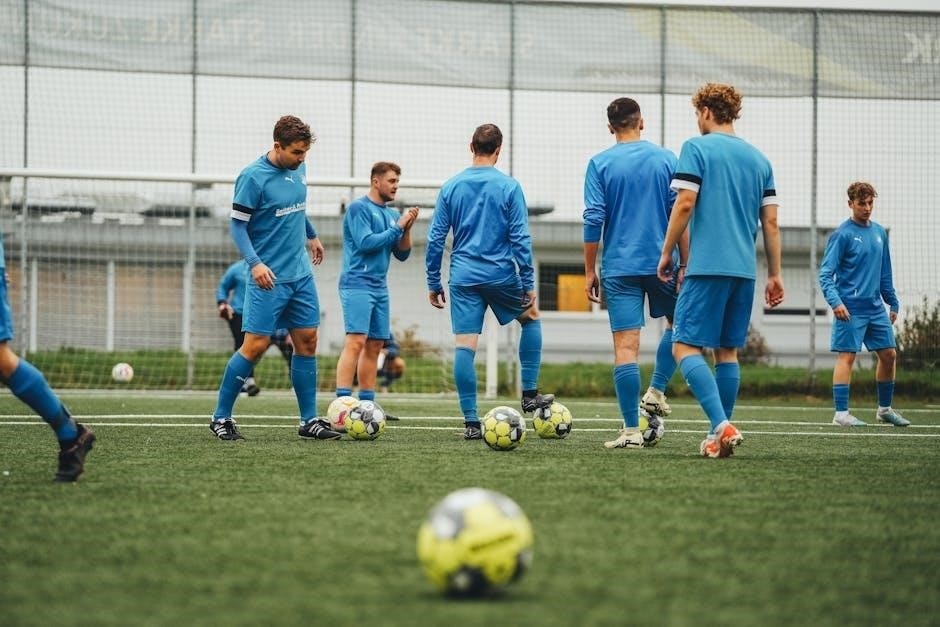
The value of a PDF format lies in its accessibility and portability. Players and coaches can easily access the program details on various devices, ensuring consistency and facilitating independent training. Furthermore, a well-designed PDF can incorporate visual aids, detailed instructions, and even video links, enhancing the learning experience. Ultimately, the goal is to create a roadmap for improvement, guiding players towards peak performance and minimizing the risk of injury. Tailoring the program to individual needs and available resources is paramount for optimal results.
The Importance of a Structured PDF Program
A structured soccer training PDF provides a clear, organized pathway for player improvement, eliminating guesswork and maximizing efficiency. Unlike ad-hoc training sessions, a PDF program ensures progressive overload, gradually increasing the intensity and complexity of drills to challenge players and promote adaptation. This systematic approach is crucial for building a solid foundation of fitness and skill.
The PDF format facilitates accountability. Measurable goals and fitness tests, often integrated within the program, allow players to track their progress and stay motivated. Moreover, a well-designed PDF can be easily shared with coaches and parents, fostering communication and collaboration. Consistency is key, and a structured program encourages adherence, with a minimum commitment of three training days per week recommended. Ultimately, a comprehensive PDF transforms training from a sporadic activity into a focused, results-oriented endeavor.
Understanding the Four Phases of Training
A successful soccer training program is strategically divided into four distinct phases: early pre-season, late pre-season, in-season, and off-season. Early pre-season focuses on foundational fitness – building endurance and establishing a base level of strength. Late pre-season intensifies training, incorporating more soccer-specific drills and increasing the volume of high-intensity work.
The in-season phase prioritizes maintenance and peak performance, balancing training with game demands to prevent overtraining and ensure players are fresh for matches. Finally, the off-season is dedicated to recovery and rebuilding, allowing players to address any imbalances and prepare for the next cycle. Each phase requires a tailored approach, adjusting the focus and intensity to align with the current goals and demands of the season. This periodization is essential for maximizing player development and minimizing the risk of injury.
Early Pre-Season (Foundation Building)
The early pre-season phase is fundamentally about establishing a robust physical base. This involves a significant emphasis on endurance training, building aerobic capacity through longer, lower-intensity runs. Simultaneously, foundational strength work is introduced, focusing on core stability and overall body strength – crucial for injury prevention.
While high-intensity work is limited at this stage, it’s important to incorporate some agility drills to prepare the body for more demanding sessions later. The goal isn’t to peak fitness, but to create a solid platform upon which to build; This phase is about consistency and gradually increasing volume, preparing the musculoskeletal system for the rigors of the upcoming season. Proper warm-ups and cool-downs are paramount during this foundation-building period.
Late Pre-Season (Intensification)
The late pre-season phase marks a shift towards higher intensity and sport-specific training. Building upon the foundation established earlier, this stage focuses on translating general fitness into soccer-specific movements. Expect increased speed and agility drills, incorporating changes of direction and reactive exercises that mimic game scenarios.
Strength training becomes more explosive, emphasizing power development for tackling, jumping, and sprinting. Endurance work transitions to interval training, replicating the intermittent nature of a soccer match – multiple sprints interspersed with periods of recovery. This phase also introduces more complex skill work, integrating technical abilities with the increased physical demands. Monitoring player fatigue and adjusting training load is crucial to avoid overtraining and injury as the season approaches.
In-Season (Maintenance & Peak Performance)
During the in-season, the focus shifts from building fitness to maintaining it and peaking for crucial matches. Training volume decreases to prioritize recovery and prevent burnout, while intensity remains high to sharpen skills and tactical awareness. Sessions become more game-realistic, incorporating small-sided games and tactical drills that simulate match conditions.
Strength and conditioning are maintained with 1-2 sessions per week, focusing on preventing muscle loss and maintaining power. Emphasis is placed on active recovery – light jogging, stretching, and foam rolling – to reduce muscle soreness and promote faster recovery between games. Nutrition and hydration become paramount, supporting energy levels and aiding muscle repair. The goal is to arrive at each game physically and mentally prepared to perform at your best, recognizing soccer’s intermittent demands.
Off-Season (Recovery & Rebuilding)
The off-season is crucial for physical and mental recovery, addressing imbalances, and rebuilding a foundation for the next year. Initially, prioritize active recovery – low-intensity activities like swimming or cycling – to flush out lactic acid and reduce fatigue. Gradually reintroduce strength training, focusing on building a base level of strength and addressing any muscle weaknesses identified during the season.
This phase allows for injury rehabilitation and preventative work. Endurance training is reintroduced slowly, preparing the body for the demands of pre-season. Skill work can be maintained through individual practice, but the emphasis is on enjoyment and avoiding burnout. It’s a time to address technical deficiencies and experiment with new skills. The 16-week program can be utilized to build overall fitness, ensuring players return to pre-season in good condition, ready to be tested and graded.
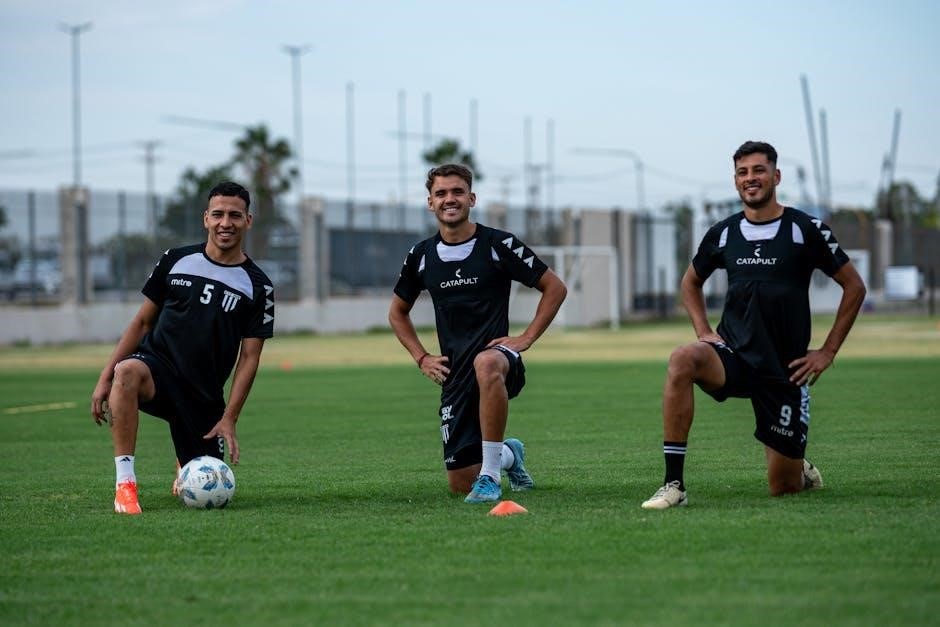
Key Components of a Soccer Training PDF
Essential elements include fitness (endurance, strength, speed, agility), skill development, and the 80/20 principle – prioritizing impactful areas for maximum player improvement.
Fitness Components: The 80/20 Principle
Applying the 80/20 principle to soccer training means focusing 80% of your effort on the 20% of exercises that yield the greatest results. Soccer demands a unique blend of physical attributes, and prioritizing these is crucial. Weight training is vital, as players require both strength and quickness simultaneously – for tackling, shielding, and winning headers.
A comprehensive program incorporates endurance training to sustain effort throughout a 90-minute match, alongside speed and agility drills to enhance explosive movements. Remember, soccer is an intermittent sport; it’s not about constant high intensity, but repeated sprints.
Strength training should be performed 1-2 times per week throughout the season, allotting approximately 30 minutes per session. This focused approach, guided by the 80/20 rule, maximizes gains and minimizes wasted effort, leading to optimal performance on the field.
Endurance Training for Soccer Players
Endurance is paramount in soccer, demanding players maintain performance throughout a 90-minute match, often with extra time. Training must replicate the game’s intermittent nature – periods of moderate aerobic activity interspersed with high-intensity sprints and brief recovery periods. Focus isn’t solely on long-distance running; instead, prioritize developing both aerobic and anaerobic endurance.
Interval training, involving repeated bouts of high-intensity running followed by short recovery jogs, is exceptionally effective. Shuttle runs and small-sided games also build endurance while simultaneously improving agility and tactical awareness.
Consider incorporating fartlek training – varying the pace and intensity of running – to mimic the unpredictable demands of a match. A well-rounded endurance program prepares players to consistently perform at their best, even during the late stages of a physically demanding game.
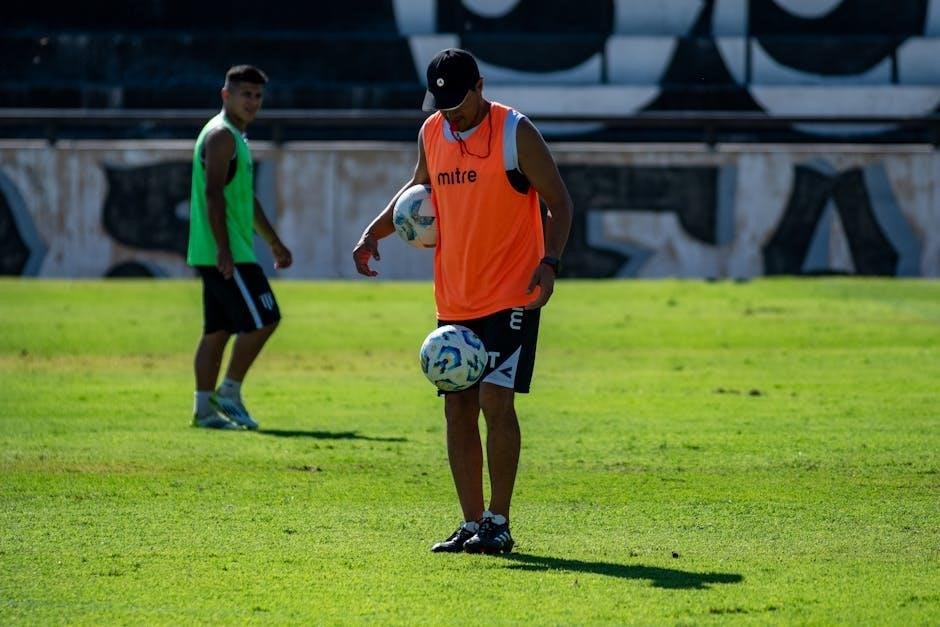
Strength Training for Soccer Players
Strength training is crucial for soccer players, demanding a balance of power and quickness. It’s not about building bulk, but enhancing the ability to perform explosive movements like tackling, shielding, challenging for headers, and executing one-on-one defending. Weight training, performed 1-2 times per week throughout the season, is vital.
Focus on compound exercises – movements that work multiple muscle groups simultaneously – such as squats, lunges, deadlifts, and bench presses. These build overall strength and power. Incorporate plyometrics, like jump squats and box jumps, to improve explosive power and agility.
A dedicated strength training regimen, consistently applied, will significantly improve a player’s physical capabilities on the field, reducing injury risk and enhancing overall performance. Remember, strength and quickness must coexist for optimal soccer performance.
Speed and Agility Drills
Soccer demands intermittent high-intensity bursts, making speed and agility paramount. Training should mimic the game’s demands – short sprints, rapid changes of direction, and quick reactions. Cone drills are excellent for improving agility, forcing players to accelerate, decelerate, and change direction quickly.
Shuttle runs, incorporating various distances, build both speed and endurance. Ladder drills enhance footwork and coordination, crucial for dribbling and maneuvering in tight spaces. Reactive agility drills, where players respond to visual or auditory cues, improve reaction time and decision-making.
Focus on proper technique – maintaining a low center of gravity, using short, powerful strides, and keeping the core engaged. Consistent practice of these drills will translate to improved performance on the field, allowing players to outpace opponents and react swiftly to changing game situations.
Skill Development Exercises
Technical proficiency is fundamental to soccer success. Skill development exercises should focus on ball control, passing accuracy, dribbling technique, and shooting power and precision. Repetitive drills, like passing against a wall, improve touch and technique. Cone dribbling challenges enhance agility and close control.
Small-sided games (1v1, 2v2, 3v3) provide a realistic game environment for applying skills under pressure. Shooting drills, varying distance and angle, develop accuracy and power. Incorporate exercises that simulate game situations, such as receiving a pass under pressure and quickly distributing it.
Consistent practice, combined with focused coaching feedback, is crucial for skill improvement. Players should strive for mastery of fundamental skills before progressing to more complex techniques. A well-rounded skill development program builds confidence and enhances overall game performance.

Specific Training Programs & Resources
Numerous programs are available, including 12-month overviews, 16-week fitness plans, and FA Soccer Star Challenge-based routines.
Position-specific and goalkeeper PDFs are also accessible.
12-Month Soccer Training Program Overview
A comprehensive 12-month soccer training program necessitates individual tailoring, considering a player’s specific needs and the resources available to them. The program’s structure is fundamentally divided into four distinct phases: the early pre-season, late pre-season, the demanding in-season period, and the crucial off-season. Each phase prioritizes different aspects of athletic development.
Early pre-season focuses on foundational fitness, building endurance and establishing a base level of strength. Late pre-season intensifies training, incorporating more soccer-specific drills and increasing the volume of high-intensity work. During the in-season, the emphasis shifts to maintenance and peak performance, managing fatigue while honing tactical awareness. Finally, the off-season is dedicated to recovery and rebuilding, allowing players to address weaknesses and prepare for the next cycle.
Successful implementation requires consistent monitoring of progress and the setting of measurable goals. This holistic approach ensures players reach their full potential throughout the year.
16-Week Program for Overall Fitness
This 16-week program is meticulously designed to significantly enhance overall fitness levels in preparation for the rigors of pre-season training and competition. Consistent adherence to the program is paramount, as it directly impacts performance during tryouts, where fitness levels will be rigorously tested and graded. The program incorporates a holistic approach, addressing all critical components of soccer-specific fitness.
Expect a progressive overload principle, gradually increasing the intensity and volume of training over the 16 weeks. This includes dedicated sessions for endurance, strength, speed, and agility. Weight training is a vital component, focusing on developing both strength and quickness – essential for tackling, shielding, and winning aerial duels.
Players are expected to commit to completing the strength training regimen 1-2 times per week throughout the entire season. Each session should be allotted 30 minutes for optimal results and adherence.
12-Week Program Based on FA Soccer Star Challenge
This specialized 12-week program is uniquely tailored to individual performance within the FA Soccer Star Challenge. It’s designed to build upon existing skill sets and address areas needing improvement, as identified through challenge results. The program’s structure is flexible, allowing players to adjust training intensity based on their progress and recovery.
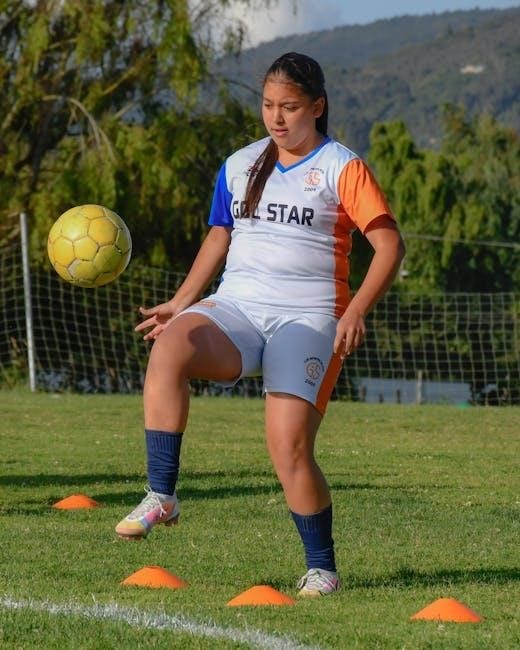
Completion requires a minimum commitment of three training sessions per week. While players are encouraged to train more frequently, each day can only be counted once towards the weekly requirement. This ensures adequate rest and prevents overtraining. The program emphasizes the intermittent nature of soccer, mirroring the multiple sprints and varying intensities experienced during a match.
Expect a blend of endurance, speed, and skill-based drills, all geared towards maximizing performance in the FA Soccer Star Challenge and beyond.
Individual Training PDF (Field Positions)
Dedicated training PDFs are crucial for optimizing player development based on specific field positions. Recognizing that a striker’s needs differ vastly from a defender’s, these resources offer tailored drills and exercises. Each PDF focuses on position-specific skills, tactical awareness, and physical conditioning requirements.
These programs address the unique demands of each role, enhancing attributes like shooting accuracy for forwards, tackling technique for defenders, and passing range for midfielders. They incorporate drills designed to simulate game-like scenarios, improving decision-making and reaction time.
Players can expect detailed instructions, visual aids, and progressive training plans. These PDFs are designed to be used independently, fostering self-reliance and accountability. Consistent implementation will lead to significant improvements in individual performance and overall team success.
Goalkeeper (GK) Training PDF (GK Specific)
Goalkeeper-specific training PDFs are essential, as the demands on a GK are uniquely different from outfield players. These resources concentrate on developing specialized skills like shot-stopping, handling, distribution, and commanding the penalty area. They move beyond general fitness, focusing on agility, reflexes, and explosive power tailored for goalkeeping.
The PDFs detail drills for diving techniques, cross-claiming, one-on-one situations, and quick reactions. They emphasize footwork, positioning, and communication – vital components of a successful goalkeeper. Progressive training plans are included, building from foundational skills to advanced techniques.
These resources provide a structured approach to GK development, enabling players to refine their abilities and build confidence. Consistent practice using these PDFs will significantly enhance a goalkeeper’s performance and contribute to a stronger defensive unit.
Monitoring Progress & Setting Goals
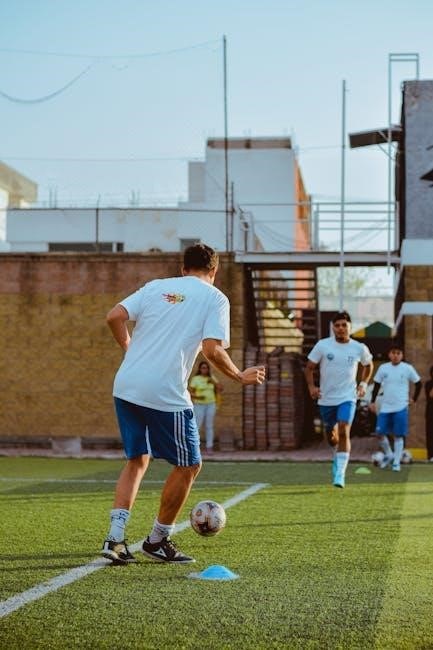
Regular fitness tests and measurable goals are crucial for tracking improvement. Soccer’s intermittent nature demands multiple sprints;
consistent training (3+ days/week) is key to success.
Fitness Tests & Measurable Goals
Establishing clear, measurable goals is paramount within a soccer training program. Your fitness levels will be rigorously tested and graded, particularly during tryouts, providing a baseline for improvement. This assessment informs individualized training plans, ensuring targeted development. The 16-week program emphasizes overall fitness gains, preparing players for the demands of pre-season.
Fitness tests should encompass key soccer-specific attributes – endurance, speed, agility, and strength. Consider incorporating tests like the Yo-Yo Intermittent Recovery Test for endurance, sprint tests over various distances for speed, and agility drills to assess change-of-direction ability. Strength can be evaluated through exercises like squat jumps and push-ups.
Setting realistic, achievable goals – both short-term and long-term – fosters motivation and tracks progress effectively. Goals should be SMART: Specific, Measurable, Achievable, Relevant, and Time-bound. Regularly monitoring performance against these goals allows for adjustments to the training program, maximizing its effectiveness.
The Intermittent Nature of Soccer: Multiple Sprints
Soccer is fundamentally an intermittent sport, characterized by repeated sprints and changes in intensity. A typical game isn’t sustained high-intensity effort; instead, it’s a dynamic blend of moderate aerobic activity (jogging, cruising) interspersed with brief, explosive sprints. Understanding this is crucial when designing a training program.
Training must replicate these demands. Traditional continuous running alone isn’t sufficient. Incorporate interval training – short bursts of high-intensity running followed by periods of recovery – to mimic the game’s stop-start nature. Shuttle runs, cone drills, and small-sided games are excellent for developing this capacity;
Focus on developing both aerobic endurance and the ability to repeatedly perform high-intensity sprints. This requires a combination of long-duration, low-intensity runs and short, sharp interval sessions. Recovery protocols are also vital, allowing players to replenish energy stores and prepare for subsequent sprints.
Realistic Time Commitments & Program Adherence
A successful soccer training program hinges on realistic expectations and consistent adherence. Players must be able to integrate the program into their lives without undue stress or burnout. A demanding schedule that’s impossible to maintain will quickly lead to discouragement and abandonment.
The provided 16-week program, for example, aims to improve overall fitness leading into pre-season. However, its effectiveness relies on consistent effort. A minimum commitment of three training sessions per week is crucial, though additional sessions are encouraged. Each session, like the strength training regimen, might require only 30 minutes.
Account for other commitments – school, work, family – when designing a schedule. Flexibility is key. Program adherence is also emphasized in programs like Silver City Soccer, where commitment is taken seriously and impacts grading during tryouts. Setting achievable goals and tracking progress fosters motivation and sustains long-term engagement.
Importance of Consistent Training (3+ days/week)
Consistent training, a minimum of three days per week, is paramount for soccer players seeking improvement. Soccer’s intermittent nature – alternating between high-intensity sprints and lower-intensity activity – demands a robust fitness base built through regular effort. Sporadic training won’t adequately prepare the body for the physical rigors of the game.
Programs like the 12-week FA Soccer Star Challenge-based plan explicitly state a minimum of three completed training days weekly, recognizing that consistent exposure to drills and exercises is vital. Even with limited time, dedicating 30 minutes, twice a week, to strength training, as suggested, yields significant benefits.
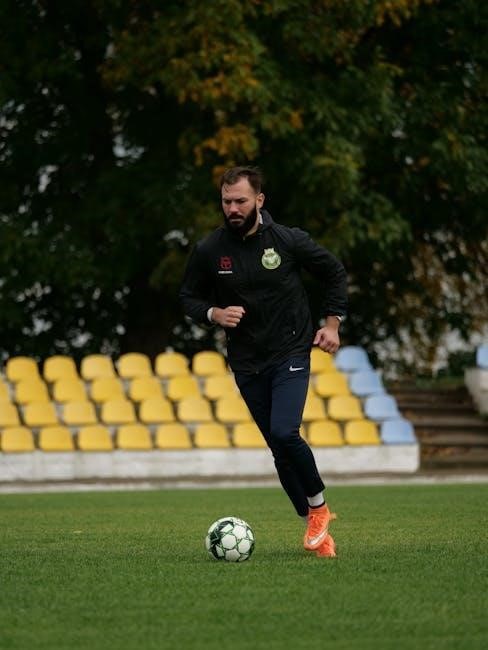
Furthermore, consistent training isn’t solely about physical conditioning; it reinforces skill development and builds mental toughness. Regular practice ingrains techniques and improves decision-making. Adhering to a schedule, even during the off-season, maintains a baseline fitness level and facilitates a smoother transition into more intense training phases.
Additional Considerations
Resources like Dr. John Cone’s “Fit for 90s” offer isolated training downloads.
Silver City Soccer Program emphasizes commitment and grading, while addressing limited space challenges effectively.
Fit for 90s: Dr. John Cone’s Isolated Training
Dr. John Cone has proactively designed downloadable training resources specifically to address the current challenges players face with isolated training, particularly in limited spaces. Recognizing the potential for extended periods where players are responsible for their own fitness regimens, these materials provide a structured approach to maintaining conditioning.
These downloads are invaluable for players unable to participate in team training due to various circumstances. They emphasize maintaining a high level of fitness independently, focusing on exercises that can be performed effectively even with minimal space and equipment. The program acknowledges the importance of consistent effort during these periods.
The “Fit for 90s” program is designed to help players stay prepared for when team activities resume, ensuring they haven’t lost ground in their physical conditioning. It’s a testament to proactive planning and a commitment to player development, even under challenging conditions. Players are expected to utilize these resources diligently.
Silver City Soccer Program: Commitment & Grading
Within the Silver City Soccer Program, commitment to training and fitness is of utmost importance and will not be taken lightly. This dedication is directly reflected in the program’s grading system, which assesses players’ adherence to the prescribed training regimens.
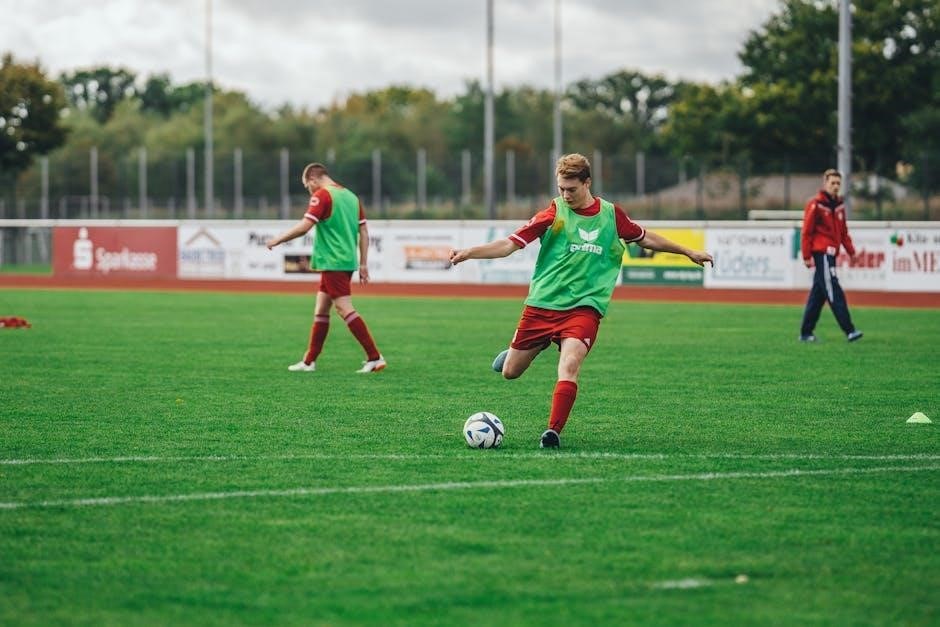
A comprehensive 16-week program is implemented to enhance overall fitness in preparation for pre-season. Successful completion of this program, and consistent effort throughout, significantly impacts a player’s evaluation during tryouts. Fitness levels will be rigorously tested and graded, forming a crucial component of the selection process.
The program incorporates all aspects of physical conditioning, ensuring players are well-prepared for the demands of the sport. This structured approach, combined with a clear emphasis on commitment, fosters a culture of discipline and dedication within the Silver City Soccer Program. Consistent effort is key to success.
Addressing Challenges with Limited Space Training
Recognizing current limitations, particularly isolated training in smaller spaces, Dr. John Cone of Fit For 90s has designed specialized downloadable resources. These address the challenges players face when access to traditional facilities is restricted, ensuring continued development.
For the coming weeks, and potentially months, players are responsible for their own training, making these resources invaluable. The focus shifts to maximizing effectiveness within confined areas, utilizing drills that emphasize agility, ball control, and individual skill refinement.
These programs prioritize maintaining fitness and honing technique despite spatial constraints. Players can adapt the exercises to their available space, ensuring consistent progress. This proactive approach demonstrates the program’s adaptability and commitment to player development, regardless of external circumstances.